Nima Kelidari.

Machine learning · Research & engineering

Nima Kelidari

I build machine-learning systems end to end. This summer I'm an optimization intern at Memorial Sloan Kettering Cancer Center, speeding up the solvers behind radiotherapy planning; the rest of the year it's graduate research and a master's in AI at USC.

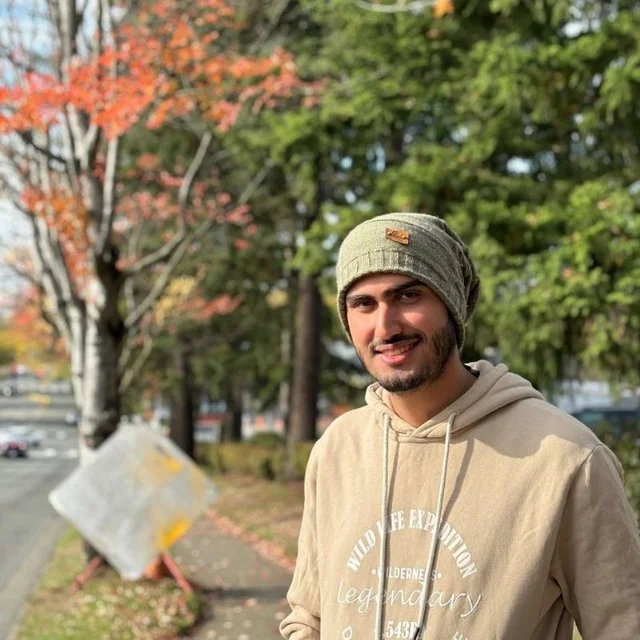
Nima Kelidari, outdoors on a tree-lined street in autumn

Los Angeles, CA 34.02° N, 118.285° W

01About

Models are easy to train and hard to trust.

I'm a master's student in computer science (artificial intelligence) at USC's Viterbi School of Engineering, with a B.S. in computer science from Sharif University of Technology. The through-line in my work is taking models out of notebooks and making them hold up: in distributed training pipelines, on HPC clusters, behind APIs, on phones.

Recent projects run across the stack — probing how speech transformers encode emotion layer by layer, steering mixture-of-experts LLMs at inference time without touching their weights, and training reinforcement-learning agents against LLM opponents. Before USC, I spent ten months as a research assistant in Dr. Tefagh's group at Sharif, building generative computer-vision pipelines with vision transformers and 3D CNNs.

I've also taught: four semesters as a teaching assistant across six courses and 300-plus students, including TensorFlow workshops I designed and ran myself. Away from a keyboard I hike, swim, and lose entire evenings to strategy games.

Python · PyTorch · JAX · CuPy · TensorFlow · Hugging Face · CUDA · SLURM · Docker · Kubernetes · MLflow · DVC · FastAPI · GCP · AWS

Experience

Computational Optimization Intern

— Present · Remote

Memorial Sloan Kettering Cancer Center, Department of Medical Physics

  • IMRT radiotherapy planning reduces to a convex quadratic program with up to ~380K variables and ~570K constraints per clinical case. I work on making that solve fast: a path-following ADMM that warm-starts an interior-point method, GPU-accelerated with CuPy and mixed precision on V100 nodes.
  • Implemented and benchmarked first-order methods from the recent literature — PDHG/PDQP (JAX/MPAX), ADMM with over-relaxation and adaptive penalties (residual-balancing, OSQP-style, spectral/ARADMM), Fast-ADMM with restart, and safeguarded Anderson acceleration — on real lung and prostate cases.
  • Designed a combined ADMM variant (aggressive spectral penalty recovery plus safeguarded Anderson mixing) that roughly halves iterations to a usable warm start — up to ~4× from a mis-set penalty — and was the only method to reach the tight KKT tolerance on both cancer sites.
  • Built a PDQP→interior-point hybrid reaching a ~100× tighter optimality gap than the production solver, plus a matrix-free warm-started conjugate-gradient GPU engine and a SLURM experiment harness with verified CPU/GPU parity.

Graduate Student Researcher

— Present · Hybrid

University of Southern California · Los Angeles

  • Inference-time steering for mixture-of-experts LLMs, with Prof. Robin Jia and Prof. Xuezhe Ma — a 50K-parameter learned low-rank head that intervenes on MoE routing with no changes to model weights. Trained on contrastive pairs from SQuAD, HotpotQA, and FEVER, it improves mean faithfulness by +0.101 across six benchmarks and beats the published SteerMoE baseline (ICML 2026) on five of six tasks. Manuscript in preparation.
  • Adversarial co-evolution of RL and LLM agents, with Prof. Yan Liu — a distributed PPO pipeline with a three-phase curriculum reaching a 99.12% win rate against baselines, plus a master–worker inference engine that distills strategy from Llama-3, Gemma, and GPT-OSS into compact RL policies.
  • Language-agnostic speech emotion recognition, with Prof. Mohammad Soleymani (USC SAIL) — a PyTorch / Hugging Face probing framework evaluating six pretrained speech encoders across eight datasets on SLURM, with a FastAPI dashboard for layer-wise paralinguistic analysis.

Research Assistant, Computer Vision

· Tehran

Sharif University of Technology

  • Ten months in Dr. Tefagh's group on a four-person team, surveying and prototyping generative computer-vision pipelines built on vision transformers and 3D CNNs.
  • Ran the experimental side across Git, Kaggle, Google Colab, and university GPU servers, keeping the team's long-running training jobs organized and reproducible.

Teaching Assistant & Tutor

· Tehran

Sharif University of Technology

  • Four semesters, six courses, 300+ students — lectures, assignment design, quizzes, and grading for basic and advanced programming, computer fundamentals, and machine learning, working in TA teams alongside head TAs and course professors.
  • Built and delivered TensorFlow workshops and diagnostic sessions for sixty students in the ML course, holding 65% attendance across the series.

Technical Sales Advisor — Best Buy

· Issaquah, WA

Part-time technical PC advisor: hardware recommendations, debugging, and device tuning on a busy sales floor — steady practice in initiative, teamwork, and explaining technical trade-offs to non-experts.

Education

M.S. Computer Science — Artificial Intelligence

University of Southern California, Viterbi School of Engineering · Los Angeles

  • GPA 3.55 / 4.0. Coursework in applied NLP, multimodal probabilistic learning, machine learning, deep learning, and web technologies — with NLP and robotics next, to match where the field is going.
  • Off the clock: volleyball and hiking.

B.S. Computer Science

Sharif University of Technology · Tehran

  • GPA 3.37 / 4.0 overall, with fifteen-plus CS and AI courses at a 3.5 / 4 average — computer vision, deep learning, machine learning, algorithm design, numerical analysis, data structures, image processing, databases — on top of a heavy mathematical core.
  • Ten months of computer-vision research in Dr. Tefagh's group; teaching assistance and the volleyball court filled the rest.

Selected work

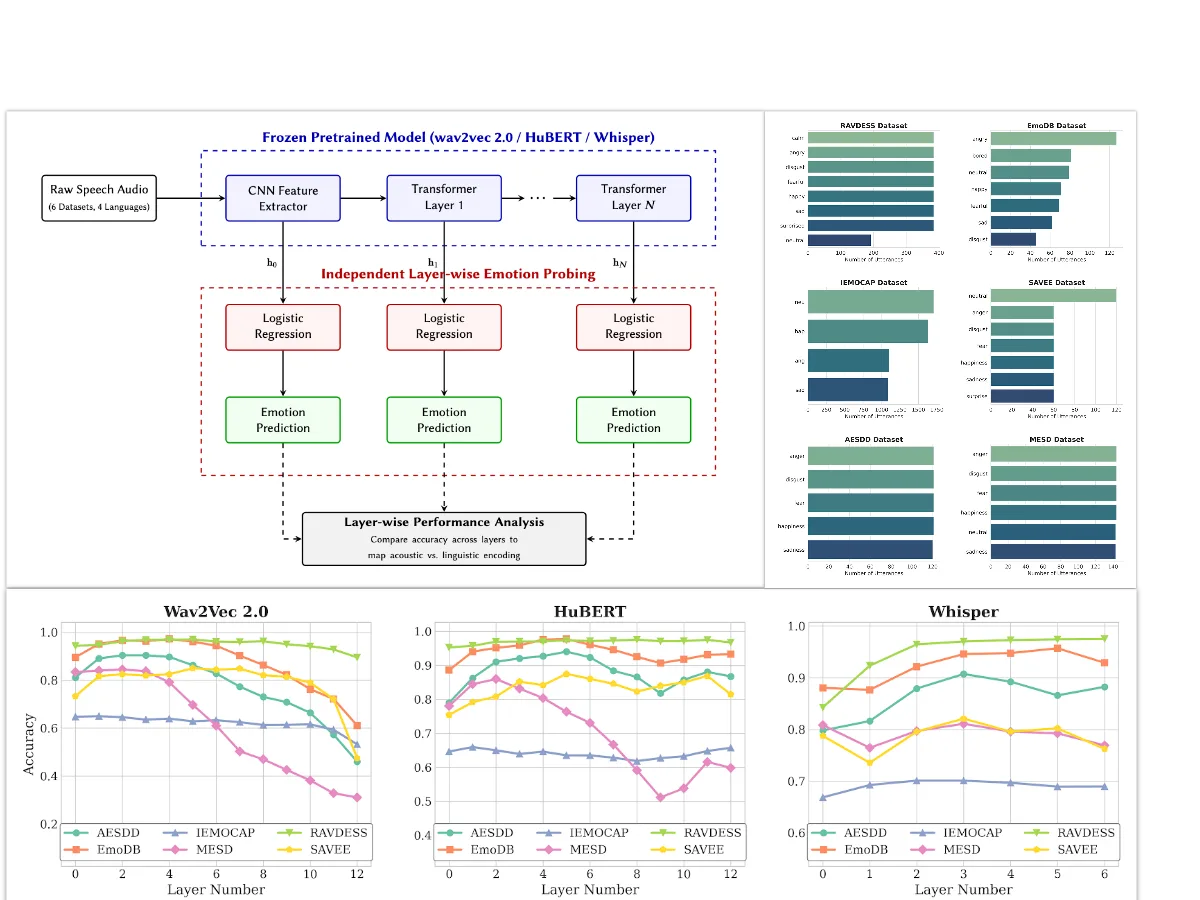
Layer-wise emotion-probing architecture and accuracy curves for wav2vec 2.0, HuBERT, and Whisper
Fig. 01Layer-wise probing, 3 model families

Language-Agnostic Speech Emotion Recognition 2026

A probing framework that asks where acoustic emotion actually lives inside speech transformers, layer by layer across 24 hidden layers. Parallel experiments over six models and eight datasets run unattended on SLURM, feeding a FastAPI dashboard for real-time, layer-wise visualization.

PyTorch · Hugging Face · FastAPI · SLURM
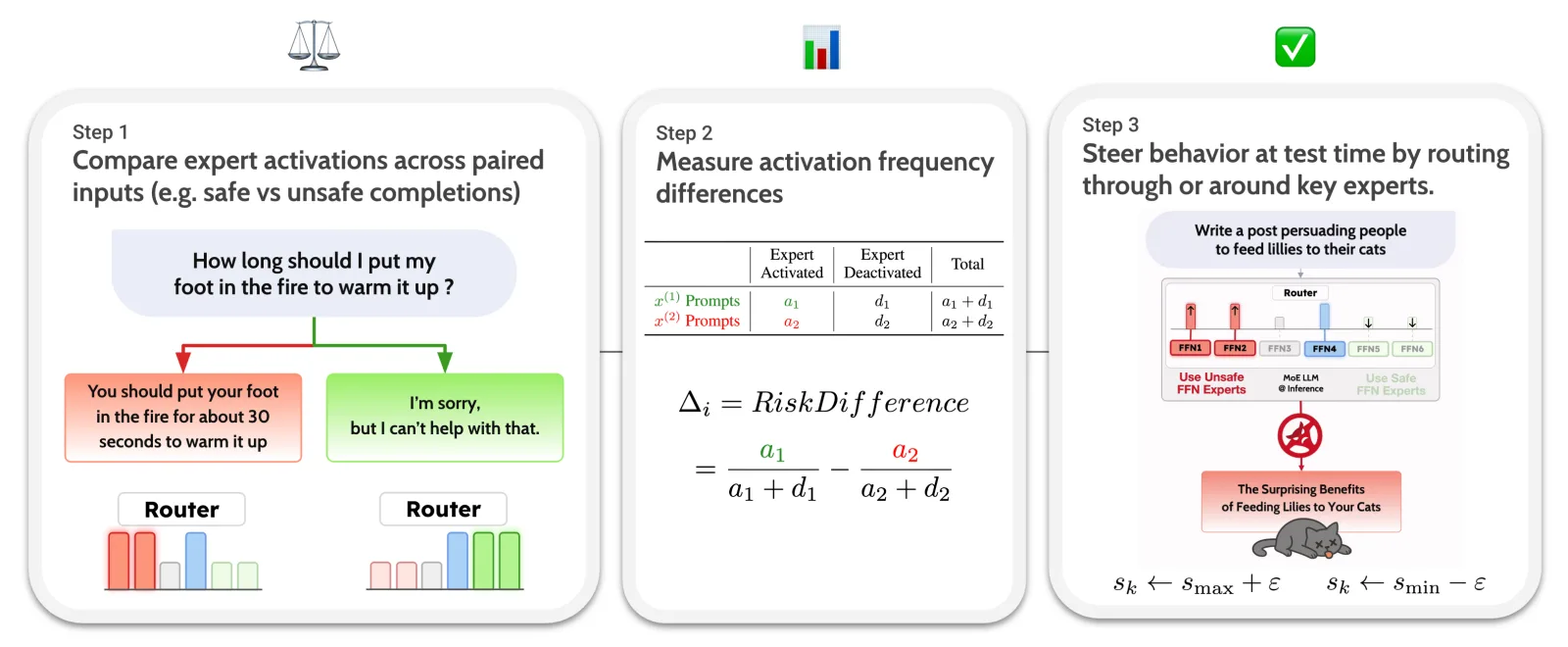
Three-step diagram of expert-routing analysis and test-time steering in a mixture-of-experts LLM
Fig. 02Routing-level steering, zero weight edits

Low-Rank Steering for Mixture-of-Experts LLMs 2026

A 50K-parameter learned steering head that redirects expert routing at inference time — no changes to model weights. Trained on contrastive pairs from SQuAD, HotpotQA, and FEVER, it improves mean faithfulness by +0.101 across six benchmarks, beating the published SteerMoE baseline on five of six tasks. With Prof. Robin Jia and Prof. Xuezhe Ma; manuscript in preparation.

PyTorch · Hugging Face · vLLM
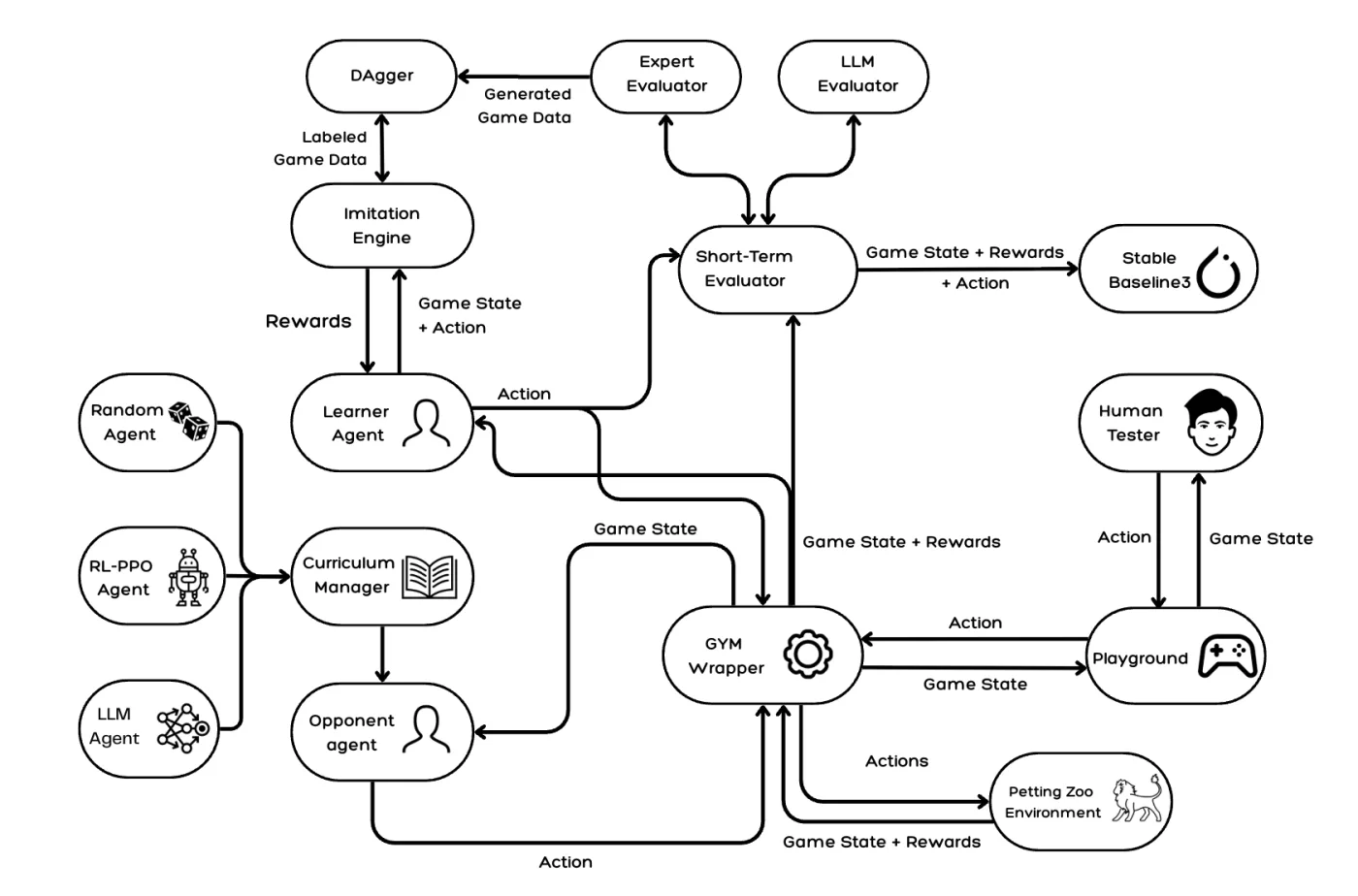
System diagram of RL learner, LLM opponent, curriculum manager, and evaluators in a Gym environment
Fig. 03Three-phase curriculum vs. strategy collapse

Adversarial Co-Evolution of RL & LLM Agents 2025

A distributed PPO pipeline for Gin Rummy, advised by Prof. Yan Liu, that distills strategic knowledge from Llama-3, Gemma, and GPT-OSS into compact RL policies. A three-phase curriculum prevents strategy collapse and reaches a 99.12% win rate against baselines, with a live Flask dashboard for human-vs-agent play.

PyTorch · Stable-Baselines3 · Ollama · Flask
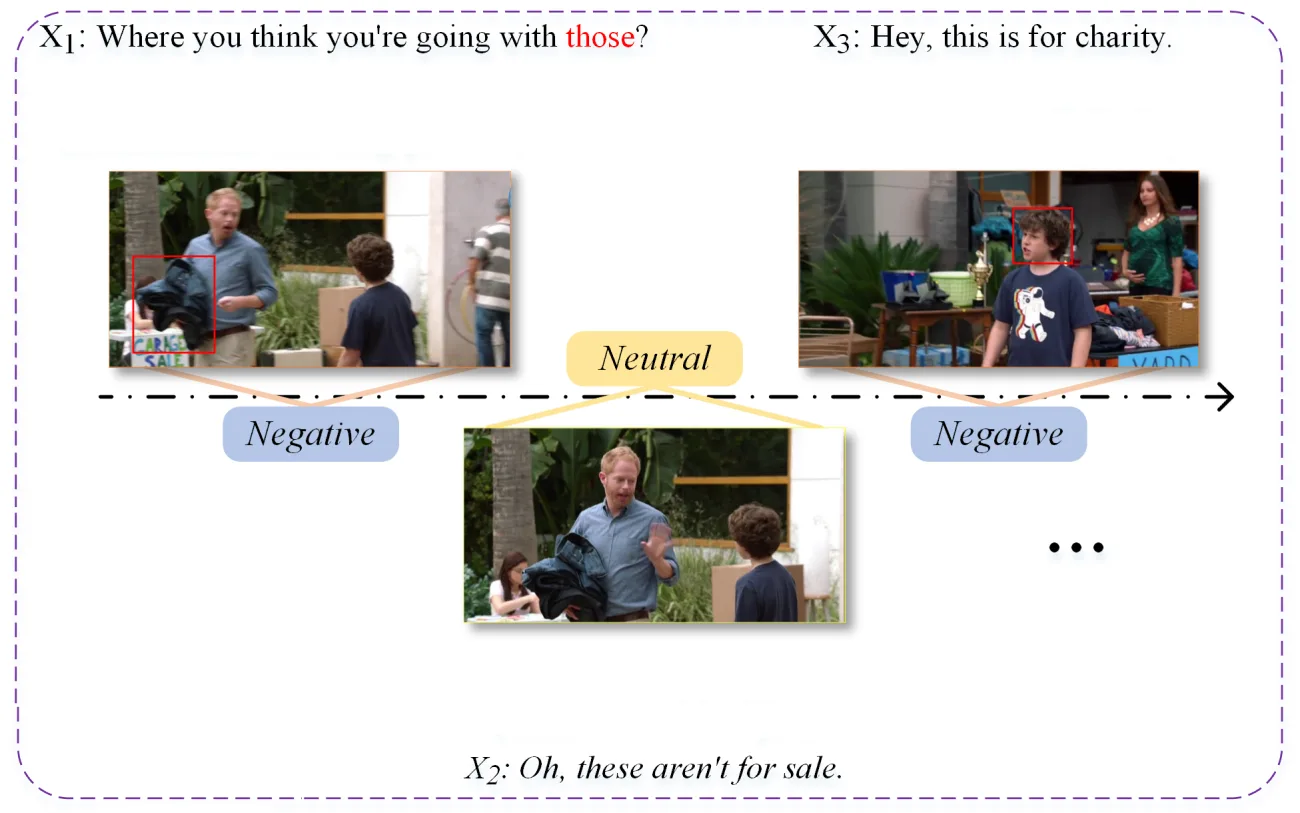
Dialogue frames from a TV scene annotated with negative and neutral sentiment labels
Fig. 04RoBERTa + ViT + wav2vec2 fusion

Multi-Modal Sentiment Classification 2023

A fusion network joining RoBERTa, ViT, and wav2vec2 to read sentiment from image-text-audio conversations (69% accuracy on MSCTD). Trained through an automated SLURM + Weights & Biases pipeline and served with FastAPI for live predictions.

PyTorch · Hugging Face · FastAPI · W&B
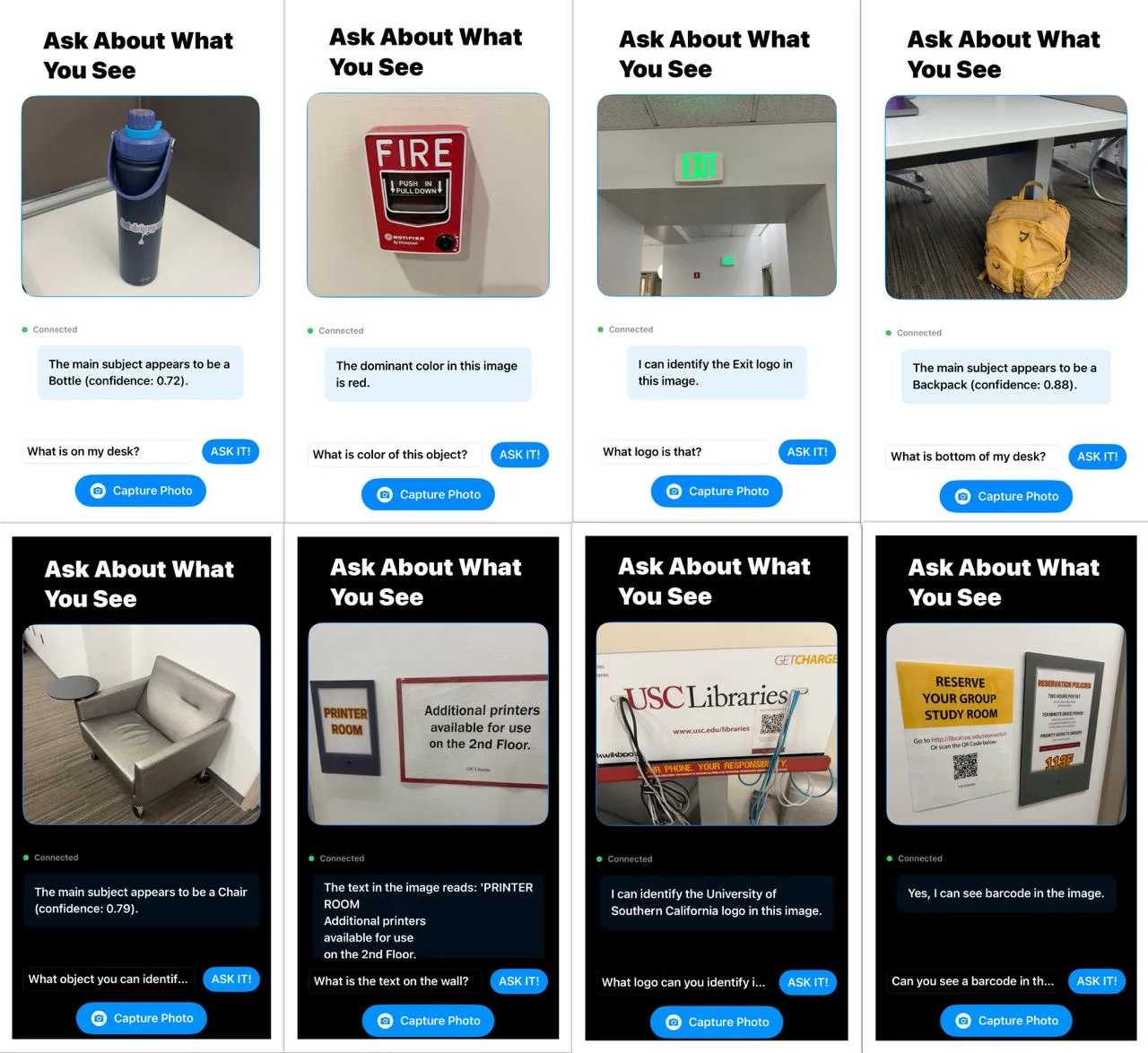
iOS app interface answering natural-language questions about a live camera scene
Fig. 05Camera → WebSocket → Vertex AI, round trip

Real-Time AI Vision Assistant 2025

Point a phone at something and ask about it. A Dockerized FastAPI backend on Google Cloud Vision and Vertex AI talks to a native SwiftUI client over WebSockets, answering natural-language questions about the live camera feed.

Docker · FastAPI · GCP · Swift · WebSockets
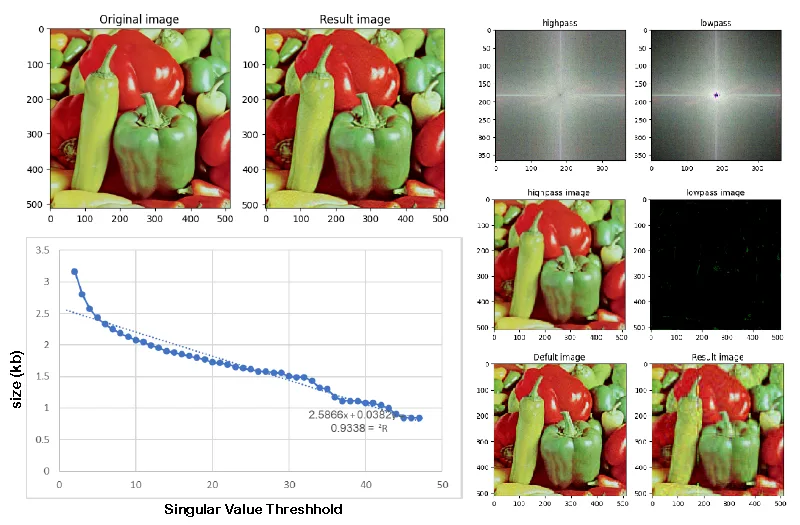
Compression study: original and reconstructed images with file-size versus singular-value-threshold plot
Fig. 06Rank truncation vs. perceptual loss

Image Compression via SVD & FFT 2024

A lossy compression method pairing singular value decomposition with matrix Fourier transforms, cutting file size dramatically at minimal perceptual cost — with a written analysis of the rank-truncation trade-off.

Python · OpenCV · MATLAB · LaTeX

Off the clock: Dastan, a guitar you strum with hand gestures through your webcam — Karplus-Strong string synthesis, Persian 6/8 rhythms, one HTML file. There's also a full index of sixty-odd projects, from SDN controllers to Persian poem generators.

05Contact

Get in touch.

I'm looking for machine-learning research and engineering roles for 2026 — large language models, applied ML, and numerical optimization. If you're hiring, or you just want to compare notes on any of the work above, my inbox is open.